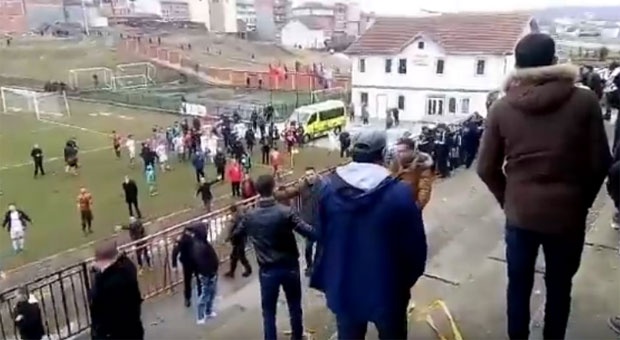
Navijaci Lila uleteli u teren i napali svoje igrace (VIDEO)

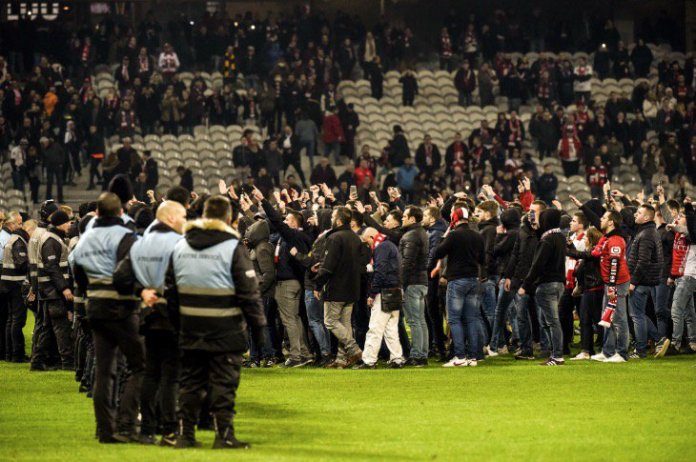
Nakon završetka sinoćnje prvenstvene utakmice između Lila i Monpeljea, na stadionu ,,Pjer Moroa”, navijači Lila ušli su na teren i obračunali se sa fudbalerima svoje ekipe.


Lil se nalazi u teškoj situaciji. Trenutno su u zoni ispadanja i prijeti im selidba u niži rang, a navijači tog kluba ne mogu da se pomire sa činjenicom da bi njihov klub mogao ispasti u drugu ligu.

Revoltirani lošim rezultatima, juče su nakon remija, 1:1, sa Monpeljeom, ušli na teren i napali svoje fudbalere na stadionu ,,Pjer Moroa”.

Juče se i u Premijer ligi takođe desio ulazak navijača na teren u duelu Vest Hema i Barnlija.

Lil trenutno ima 28 bodova i nalazi se na 19. poziciji u francuskom prvenstvu, sa bodom manje i utakmicom više od Tuluza, koja je prva ekipa ,,iznad crte”.


https://www.youtube.com/watch?v=Rjb01zCn1To

THE LAST OF THE ULTRAS: PARIS SAINT-GERMAIN AND THE REPRESSION OF FOOTBALL FANS IN FRANCE

THE GRANDMA WAS not prepared for it. She lifted one speckled, wizened hand to her face in surprise. From the other dropped a candy-striped shopping bag, an army of bread rolls spraying onto the empty platform around her. For a moment, only the sound of bouncing pastries. Then noise.

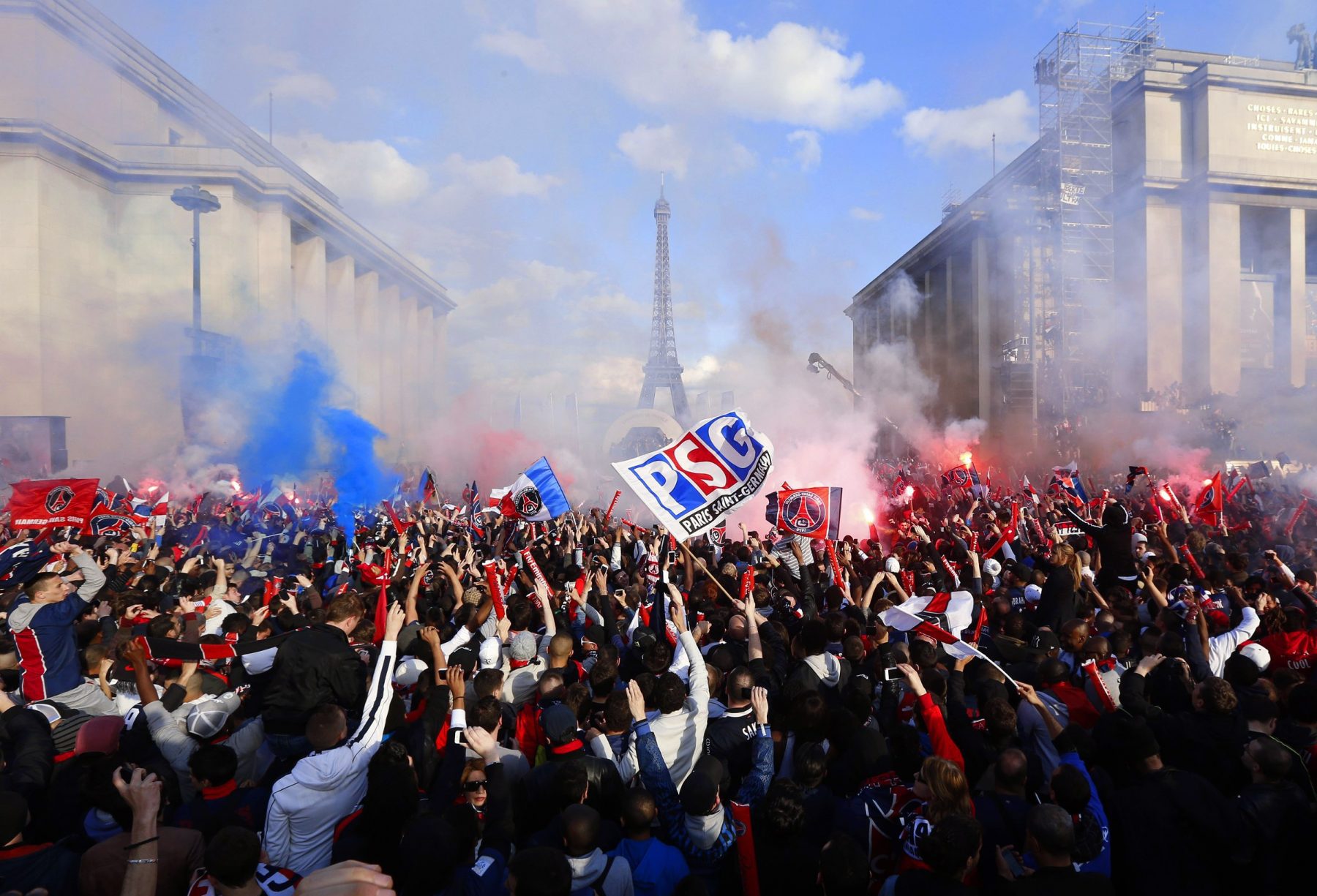
On the metro platform opposite to her, a motley crew of shaggy hair and stubbled faces. Hundreds of them. They sing gruffly, brandishing in the air a red and blue nylon flag and about forty smartphones. “Allez Paris!”

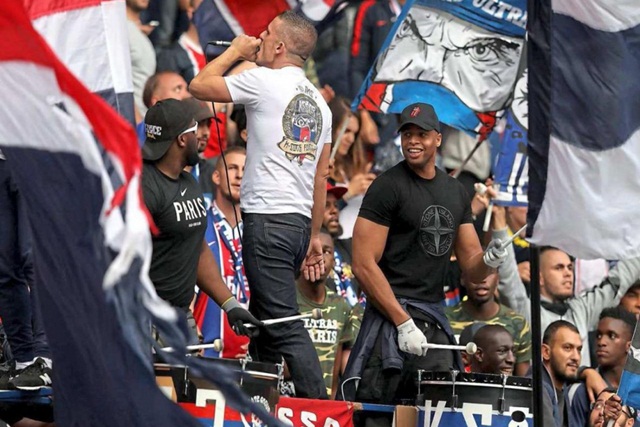
These are the chosen fans. The ones that Paris Saint-Germain’s acting Director of Security, Jean-Michel Ribes, has permitted to travel to Madrid as ambassadors of the PSG and Qatari brand abroad. These are also the last of PSG’s ultras. They belong to the Collectif Ultras Paris (CUP), the only supporters’ group tolerated by PSG’s President Nasser Al-Khelaîfi. But why does he indulge them? Because in October 2016 their leader, Romain Mabille, promised never to criticise the club’s Qatari owners nor to question the Gulf state’s geopolitics. Instead, it’s apolitical myopia. The CUP sing only about matters on the pitch.

Today, the CUP’s behaviour matters. A trip to the Bernabéu – that sacred cow of stadiums – is the footballing equivalent to a trip to Disneyland. Real Madrid, with its mythic history, is the reference point for any aspiring European superclub. Ninety minutes at the Bernabéu allows such clubs to turn a mirror unto themselves and chart their own progress. What do these fans want to see when they look in the mirror? They want to see a fan base that is respected in its own right – not derided as glory hunters, arrivistes of the Qatari era.

Accused of being fake fans, of supporting a team fuelled on petrodollars, what happens at this Madrid metro stop therefore matters deeply to these Parisian fans. They want to put on a display that proves their authenticity – that they too are ultras, not just happy-clappers of the Qatari Sports Investment (QSI) era.

Unfortunately, they appear not to have thought this through. They have chosen a platform where their only audience is five unsuspecting locals and a pastry-laden granny. Their black hoodies emblazoned with skulls look a bit 1990s, being either what a pretend ultra would wear to a fancy dress party or what you would buy for your daughter after she went on the Pirates of the Caribbean ride. Their songs follow the tunes of that engineered music stadiums put on when a team scores. The live videos they record suggest that the immediate affirmation they seek is that of YouTube subscribers rather than football fans.

Their blandness is not surprising, however. It is the product of the stringent levels of control that PSG have exerted in tailoring their own support base.

Following QSI’s buy-out of the club in 2011, Nasser Al-Khelaîfi has overseen an administrative campaign to pacify the club’s supporter base. In recent years, the word pacify might be confused as a euphemism. What for? For blacklisting any fan who expresses an opinion that threatens PSG or QSI’s commercial interests.

On 5 May 2014, Yoann Seddik attended the PSG-Monaco match at the Parc des Princes as part of his season ticket at the club. As the match entered a lull, he started singing, “Season tickets too pricey, supporters angry.” Within three minutes he had been bustled from his seat by muscular stewards. The outcome? Seddik was presented with a banning order from the stadium.

Inspired by this incident, the news outlet Mediapart ran a small experiment. They wanted to see whether the club was also policing dissent on social media networks. Mediapart journalist and PSG season-ticket holder Guillaume Blanc uploaded a tweet with the hashtag #ShameOnPSG. In the tweet, he criticised club Al-Khelaîfi for his record on freedom of speech. Within three days, Blanc received a letter from PSG’s Director General in which he was threatened with legal proceedings.

PSG were not only keeping tabs on fans; they were keeping dossiers. In 2015, scandal erupted in France when it was leaked that PSG had worked with the Parisian police to illegally collect personal data on its supporters. Data points included individuals’ profession, income, previous participation in demonstrations, marital status, driving license details and vehicle registration.

Strikingly, the 2015 scandal is not the only occasion when PSG has joined forces with state organs in targeting fans. In 2013, a press release issued by Evian days prior to their home game against the Parisian club caused a political earthquake. Evian revealed that they had received not from PSG, but rather from the Ministry of the Interior itself, a list of 2,007 PSG fans who should be denied entry to the stadium for not “conforming to the values of PSG.” None of these 2007 individuals had ever even been cautioned for a football-related offence.

Rather, they had fallen victim to what quickly became known as the Boutonnet doctrine. The director of the Division for the Fight Against Hooliganism (DNLH), the Ministry of Interior body responsible for collating the blacklist, Antoine Boutonnet, established a low threshold for what constituted a hooligan. A hooligan was a person “in any way susceptible whatsoever to disturb the smooth running of a match.” By choosing a person’s potential susceptibilities, rather than their past behaviour as the operative factor in whether to blacklist them or not, Boutonnet gave himself and PSG a blank cheque to ban whoever they wanted.

The exact nature of Boutonnet’s relationship with PSG soon became troubling. Photos leaked of Boutonnet attending PSG’s private trophy celebrations. Confirmation followed shortly thereafter that he was travelling with PSG to away fixtures to assist the club to deny entry to blacklisted fans.

Then, in February 2014, as PSG played away to Monaco, Boutonnet permitted PSG to deny entry to 100 fans who possessed valid tickets in their name. In doing so, he committed an illegal act in contravention of Article 40 of France’s Penal Code. The response? Boutonnet’s relationship with the club was condemned by the French judiciary in a Conseil d’État ruling later that year.

Nevertheless, Boutonnet continued his co-operation with the club. This is but symptomatic of what appears to be a revolving door policy between PSG and state officials. Many of Al-Khelaîfi’s right-hand men are former French policemen, whilst the latest candidate for PSG’s vacant Director of Security position was a political adviser to Nicolas Sarkozy during the latter’s presidency.

It remains unclear why QSI considered those 2007 blacklisted individuals not “to conform to the values of PSG.” Prior to the group’s purchase of the club, PSG certainly did have a number of violent far-right elements amongst their support base requiring attention. In 2006, following a match between PSG and Israeli side Maccabi Haifa, 250 anti-Semitic PSG ultras cornered a Haifa fan in a bar. Fearing that a public execution was to take place, a policeman intervened, fatally shooting Julien Quemener, a PSG fan.

Similarly, in March 2010, Yann Lorence, a member of the neo-fascist Boulogne Boys, was killed in a factional dispute between PSG ultras. It was for this very reason that, in the year prior to QSI investing in the club, then-PSG President Robin Leproux banned all ultra groups from the stadium. Such was the radical nature of these reforms that they soon assumed their own name: Le Plan Leproux.

What is more curious, however, is the extent to which QSI have expanded the Plan Leproux. Robin Leproux’s measures initially targeted only the 1,200 ultras present in the Boulogne and Auteil stands at the Parc. This was in recognition of the fact that the majority of fans in these stands had nothing to do with the ultras, preferring to be behind the goals for the cheaper ticketing pricing or atmosphere.

Under QSI, 13,000 fans from the Auteil and Boulogne stands were banned from attending PSG matches. In addition, ticket prices in these stands increased by 70 percent by the end of QSI’s first year in charge. This has inevitably raised suspicions that the new ownership might be charged with associating working-class supporters with hooliganism. Or at least that the Plan Leproux perhaps provided a convenient pretext through which the club could achieve the gentrification of its support.

Respected journalists such as Jérome Latta of Le Monde have gone as far as to accuse QSI of socially engineering PSG’s support base. Nicolas Hourcade, France’s leading sociologist of sport, has accused the club of seeking a “pliable fanbase composed solely of consumers.”

Given the obscurity of QSI’s intentions, it is alarming that it has received nigh-on unconditional support from the French state for its actions. A pattern is developing in the relationship between PSG and successive French administrations. Each time PSG is engulfed in scandal, whether it be the blacklisting of fans in 2013 or allegations of breach of data protection in 2015, the state soon retroactively legalizes such behaviour.

Six days after the Conseil d’État prohibited PSG fans from blacklisting or collating dossiers on its supporters, the French Minister of Interior passed a statutory instrument so as to render these acts legal. A 2016 Act passed by the French legislature, somewhat misleadingly called ‘The Law reinforcing dialogue with supporters and the fight against hooligans’, now allows clubs to collect data on their fans.

But Why? Why have PSG found such a receptive audience amongst French politicians? Why have successive French administrations been so willing to deprive football fans of basic rights?

An answer comes into view upon taking a look at the chronology of France’s legislative reforms in this area. The first wave of these reforms came in the mid-1990s. The 1993 Alliot-Marie Law allowed for the establishment of stadium bans of up to five years, while the 1995 Law Pasqua permitted video surveillance of suspected hooligans. They were passed into law under the the right-wing government of Édouard Balladur.

Balladur had won at the polls in 1992 after standing on a message of restoring national order, after several prominent terrorist threats to France in the preceding 12 months. Such threats intensified during Balladur’s time in office. In 1994, a member of the Armed Islamic Group unsuccessfully hijacked a plane with the intention of crashing it into the Eiffel Tower. In July 2015, a terrorist attack at the Paris RER station at Saint-Michel led to eight deaths. It was but the first of five terrorist attacks that would hit Paris by the end of the year.

This first wave of reforms, therefore, came at a time when the French public displayed an acute anxiety to all forms of extremism. During a state of emergency in which interior minister Charles Pasqua was pronouncing that the very future of France was at stake, the erosion of a few civil liberties could be overlooked. When PSG fans attacked and beat into a coma a riot police officer before their 1993 home match against Caen, football hooliganism became the latest iteration of the threat to public order in France.

Football was a public order issue that politicians could ‘win’ on. If Pasqua had little control over the transnational threat posed by Algerian insurgent groups, it was rather more easy to control the delimited space of a football stadium. It is not surprising that he took political ownership of the issue, giving his name to second major legislative reform of 1995. Nor were Pasqua’s successors at the Ministry of the Interior blind to the political capital to be gained in this arena. A certain Nicolas Sarkozy was careful to cultivate his reputation on this issue during his time as Minister of the Interior prior to the 1998 World Cup.

Fast-forward to 2006 and Jacques Chirac’s administration had made the War on Terror its political centrepiece. With Dominique Villepin as Prime Minister, his government produced one of the most notable documents of the entire post 9/11 era. The 140 page ‘France in the face of terrorism’ white paper released by the French Diplomatic Service at the Quai D’Orsay in January 2006 provided a strategic blueprint of how France would maintain public order at home and abroad. For the radical nature of the proposals it offered, it has been ranked by historians as second only to George W. Bush’s National Security Strategy of 2002 for its importance in understanding the era.

With Sarkozy back at the Interior Ministry, 2006 was not but a year of strategic blueprints. Sarkozy oversaw the passing into statute of the ‘Law in the Fight Against Terrorism’, one described by CNIL, France’s state-backed national regulator of civil liberties, as ‘Liberticide’ (killing liberties). Its principal effect was to remove a range of administrative functions from judicial oversight.

It was in this context that the second wave of reforms to football came. As news broke on 23 November 2006 of the death of a PSG fan following his involvement in an anti-Semitic attack against an Israeli supporter, political discourses sharpened. Just as in 1995, hooliganism and terrorism had become intertwined; so too would they in 2006.

Except this time the association was made more exploit. It was in France’s 2006 ‘Law in the Fight Against Terrorism’ itself that a provision was made allowing for administrative stadium bans to be imposed on football fans. The difference between these bans and those imposed under the 1993 Alliot-Marie Law was that there was no right to appeal the new sanction. A supporter could not review their ban in the courts. Nor did the authorities have to provide evidence or an explanation for the punishment. Furthermore, football clubs were given the power to dissolve any supporter club that infringed their stadium rules. It was a power that would soon be exercised.

After the death of 90 concertgoers in Paris’ Bataclan venue and the killing of 40 others in the city’s neighbouring streets and cafés in November 2015, France has entered a permanent state of emergency. The state of emergency declared by President Hollande on the evening of the attacks has been extended already over six times. There appears to be no signs of it abating despite the coming to power of Emmanuel Macron.

With police resources stretched, it is a period in which there has been little political tolerance for the misdemeanours of football fans. The Hollande administration controversially permitted police the use flash-balls – handguns that fire rubber projectiles at the speed of regular ammunition – against fans in Montpellier, Strasbourg, Paris and Marseille in 2014. Hollande’s political discourse towards fans also carried a punch. His Interior Minister even went so far as to inform the Senate that what the country needed now “was a football without football supporters.”

The principal irony of the 2016 ‘Law for Reinforcing Dialogue with Supporters and Fighting Hooliganism’ lies in its name. Drafted principally not by parliamentarians but by lawyers resident within the Ligue de Football Professional (LFP) and the Fédération Française de Football (FFF), the latter’s representatives failed to attend the French Senate when invited to discuss the law. When France’s main supporters’ representative body, the Conseil National des Supporters Français (CNSF), invited the head of both organisations to a fans’ forum on the law, they were faced with empty chairs.

Instead, the law grants administrative bodies unprecedented powers over the basic rights of French citizens. France’s Departmental and Regional Prefects are now allowed to restrain freedom of movement. The prefect of the Paris region can, for example, ban any resident of the Nord-Pas-de-Calais from entering his or her territory for a 24 hour period. Similarly, they can ban the travel of all away fans or that matches be played behind closed doors. The consequences have been staggering. In 2016 alone, 218 matches in France saw a prohibition on the attendance of away fans. This represented a 7,000 percent increase on the number of matches played without away fans in 2011/2012.

Perverse anecdotes abound. In 2016, in light of the upcoming match between Bastia and Lens, the Prefect of Corsica banned all residents of the Nord-Pas-de-Calais from visiting his island for 48 hours. Weeks later, he took the same action with regard to residents of Marseille. In January of this year, the LFP Commission of Discipline decided to close down entire sections of Marseille’s Stade Vélodrome for their match against Metz. The problem? The decision was taken at 11 o’clock at night on the evening before the game. Supporters who had already travelled were left stranded.

Unsurprisingly, France’s National Association of Supporters (ASN) has declared a campaign of civil disobedience. Faced with continued bans on away fans, local supporters seem set on purchasing tickets for their travelling counterparts in the home end. The recent Strasbourg-Bordeaux match saw ultras of both teams standing together in solidarity. Clubs across Europe are getting in on the act. Bayern Munich fans displayed an artwork in tribute to Strasbourg fans at their home match against Schalke. Torino and Florentina fans did the same in Italy.

So can we expect a change in political tack anytime soon? Following the unexpected and tragic suicide of Antoine Boutonnet last November, calls have been heard for a détente with football fans. Boutonnet’s replacement at the DNLH, Antoine Mordacq, has admitted that reforms are needed. Similarly, Didier Quillot, the new president of the LFP, has declared himself to be against stadium bans and the prohibitions on away fans attending matches.

The key decision-makers, however, remain unmoved. Whilst the LFP has shifted the tone of its speech, it has not shifted the nature of its acts. With QSI owning not only PSG but beIN SPORTS, the television company that controls television rights to Ligue 1, the LFP knows not to bite the hand that feeds it. It has been very receptive to PSG complaints about freedom of expression in the past.

When Saint-Étienne fans displayed a banner criticising Qatar for its financing of terrorism, the club was presented with a heavy fine and a suspended stadium ban. When supporters of Strasbourg did the same a few weeks later, a complaint from beIN SPORTS to the LFP led to identical punishment being dealt out.

Beyond that, the Macron Presidency does not seem to have augured any change in state policy. Macron has refused to comment on the 2016 Lori Larrivé. If anything, repression looks et to continue under the new leader. In a recent edition of the French legal journal, Penal Law, one of Macron’s advisers has even written a defence of the current policy and rejected any possibility of a support’s Bill of Rights. The result? Plus ça change, plus c’est la même chose.

( By Alexander Shea | These Football Times )
Chaos in London, Captain beat the fans, West Ham owners leave the stadium

Unhappy West Ham fans

For some time West Ham fans have complained about the leadership of the club, and various transparencies have expressed dissatisfaction, but today they have gone a step further.

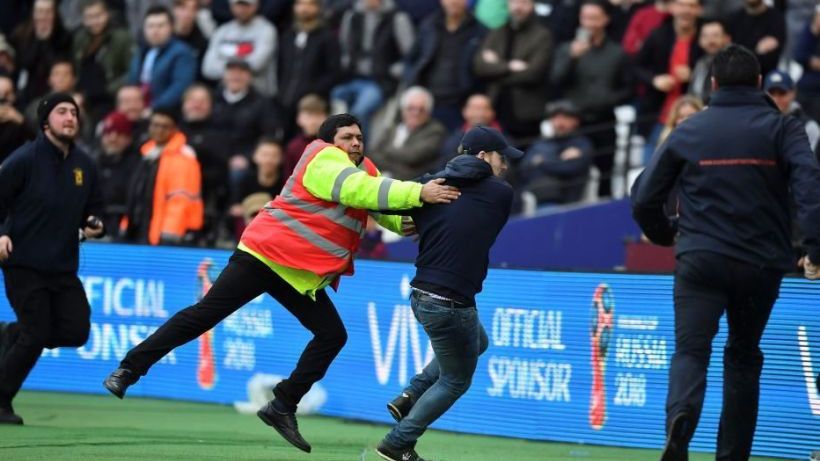
The fans started to enter the field after West Ham received the goal in the second half and Captain Mark Noble fought with a fan and even crashed it on the grass.

Fans tried to attack David Sullivan and David Gold, whom the police advised to leave the stadium. In the end, they did, and Wset Ham came up with a new defeat to be seriously concerned about survival.

30-wheelers have 30 points, only three more than Crystal Palace and Stoke, teams from the dangerous zone.

ENGLESKA: Neredi u Londonu, Navijači West Ham-a ulazili u teren

West Ham je danas poražen od ekipe Burnleyja rezultatom 3:0 i to je bila kap koja je prelila čašu navijačima West Ham-a.

Već neko vrijeme se West Hamovi navijači žale na vodstvo kluba i raznim transparentima su iskazivali nezadovoljstvo, no danas su otišli korak dalje.

Naime, navijači su počeli ulaziti na teren nakon što je West Ham primio gol u drugom dijelu, a kapiten Mark Noble se tukao s jednim navijačem i čak ga oborio na travu.

U zadnje vrijeme West Hamovi navijači gaje netrpeljivost prema vodstvu kluba koje iskazuju raznim transparentima ali danas više nisu mogli izdržati.
Nakon što je West Ham primio gol u drugom poluvremenu, navijači su počeli da ulaze na teren, a kapiten Mark Noble je došao u sukob sa jednim od tifosa te ga oborio na travu.

Navijači su pokušali napasti osobe iz vodstva kluba, Davida Sullivana i Davida Golda, kojima je policija dala savjet da napuste stadion. Oni su to i učinili, a kultni engleski klub West Ham je ovim porazom došao u situaciju da se ozbiljno brine za opstanak u Engleskoj elitnoj fudblaskoj ligi.

Popularni Čekićari nakon 30 kola imaju samo 30 bodova, tri više od Crystal Palacea i Stokea, timova na dnu tabele iz tzv. “opasne zone”.

(Balkanskinavijaci.com)

REPRESIJA: Kraj ultrasa u Parizu

Baka nije bila spremna za to. Iznenađeno je podigla jednu pjegavu, pametnu ruku na lice. S druge strane ispustila je vrećicu s bombonama. Zatim buka. Na podzemnoj željeznici, suprotnoj od nje, bilo je stotine usidrena lica. Stotine njih. Pjevajući sa crvenim i plavim zastavama. “Allez Paris!”

To su odabrani fanovi. Oni kojima je oficir za sigurnost Paris Saint-Germaina, Jean-Michel Ribes, dopustio da putuju u Madrid kao veleposlanike PSG-a i katarskog brenda u inozemstvu. Ovo su i posljednji PSG ultrasi. Spadaju u Collectif Ultras Paris (CUP), jedinu grupu navijača koju je tolerirao predsjednik PSG-a Nasser Al-Khelaîfi. Ali zašto ih on voli? Jer u oktorbru 2016. njihov lider, Romain Mabille, obećao je da nikada neće kritizirati vlasnike katarskih klubova niti dovoditi u pitanje geopolitiku Zaljevske države. Umjesto toga, to je apolitična kratkovidnost.

Danas je ponašanje CUP-a važno. Putovanje na Bernabé fudbalski je ekvivalent putovanju u Disneyland. Real Madrid, sa svojom mitskom poviješću, predstavlja referentnu tačku za bilo koji evropski nadograđen klub. Devedeset minuta na Bernabéu dopušta takvim klubovima da okrenu zrcalo za sebe i dijele vlastiti napredak.

Nakon kupnje klubova iz QI-a 2011. godine, Nasser Al-Khelaîfi je nadgledao administrativnu kampanju kako bi pomirio bazu navijača kluba. Posljednjih godina, riječ pacify može biti eufemizam. Za što? Za crnu listu svakog navijača koji izražava mišljenje koje ugrožava komercijalne interese PSG-a ili QSI-ja.

Dana 5. maja 2014. Yoann Seddik je bio na utakmici PSG – Monaco na Parc des Princesu. Kako je utakmica odmicala, počeo je pjevati: “Sezonske ulaznice suviše su skupe, navijače ljutite”. Ishod? Seddiku je na stadion zabranjen ulazak.

Inspirirani tim incidentom, medijska kuća Media Press pokrenula je mali eksperiment. Željeli su vidjeti hoće li klub također raditi na neslaganju na društvenim mrežama. Mediapart novinar i vlasnik PSG-ove sezonske karte Guillaume Blanc prenio je tweet s hashtagom # ShameOnPSG. U tweetu je kritizirao klub i Al-Khelaîfija. U roku od tri dana, Blanc je primio pismo od glavnog direktora PSG-a u kojem je zaprijetio pravnim postupcima.

U 2015. godini u Francuskoj je izbio skandal kada je procurilo da je PSG radio s pariškom policijom za ilegalno prikupljanje osobnih podataka o svojim pristašama. Tačke podataka obuhvatale su zanimanje pojedinaca, dohodak, prethodno sudjelovanje u demonstracijama, bračno stanje, pojedinosti vozačke dozvole i registraciju vozila.

Nevjerojatno, skandal u 2015. nije jedina radnja, kada je PSG udružio snage s državnim organima u ciljanju ekstremnih navijača. Godine 2013., priopćenje koje je izdao Evian nekoliko dana prije njihove domaće utakmice protiv pariškog kluba izazvalo je politički potres. Evian je otkrio da nisu primili od PSG-a, već iz samog Ministarstva unutarnjih poslova, popis navijača od 2.007 njih kojima bi trebali zabraniti ulazak u stadion. Nijedan od ovih 2007 pojedinaca nisu bili registrovani kao huligani niti su osuđivani.

Umjesto toga, oni su bili žrtve onoga što je brzo postalo poznato kao Boutonnetova doktrina. Direktor Odjela za borbu protiv huliganstva (DNLH), tijelo Ministarstva unutarnjih poslova koje je odgovorno za sortiranje crnog popisa, Antoine Boutonnet, uspostavio je nizak prag za ono što se zove huligan.

Tačna priroda Boutonnetovog odnosa s PSG-om uskoro postaje zabrinjavajuća. Uskoro je uslijedila potvrda da je sa PSG-om putovao na utakmice kako bi pomogao klubu da odbije ulazak navijačima na crnoj listi.

Ostaje nejasno zašto QSI smatra da pojedinci na crnoj listi iz 2007. nisu “prilagođeni vrijednostima PSG-a”. Prije kupnje kluba, PSG je sigurno imao niz nasilnih elemenata daleko desnog elementa među njihovom potpornom i to je zahtjevalo pažnju. Godine 2006., nakon utakmice između PSG-a i izraelskog Maccabi Haife, 250 anti-semitskih PSG ultrasa izbola je navijača Haife u baru.

Slično tome, u martu 2010. godine, Yann Lorence, član neofasističkih Boulogne Boysa, ubijen je u frakcijskom sporu između PSG ultrasa. Upravo zbog toga, u godini prije ulaska QSI-a u klub, predsjednik PSG-a Robin Leproux zabranio je sve ultra grupe sa stadiona. Takva je bila radikalna priroda tih reformi da je dobila naziv: Le Plan Leproux.

Ono što je simptomatično, ipak je, u kojoj je mjeri QSI proširio Plan Leproux. Robin Leprouxove mjere u početku su usmjerene samo na 1.200 ultrasa Boulogne i Auteilja.

Prema QSI-u, 13.000 navijača Auteilja i Boulognea imaju zabranu prisustvovati PSG utakmicama. Osim toga, cijene ulaznica na tim štandovima porasle su za 70 posto do kraja prve godine QSI-a. To je neizbježno podiglo sumnju da bi novo vlasništvo moglo biti optuženo za povezivanje radničkih navijača s huliganizmom. Ili barem da je Plan Leproux možda osigurao zgodan izgovor kroz koji bi klub mogao postići gentrifikaciju navijača.

Police Operation “Red Card” against Zulu Warriors

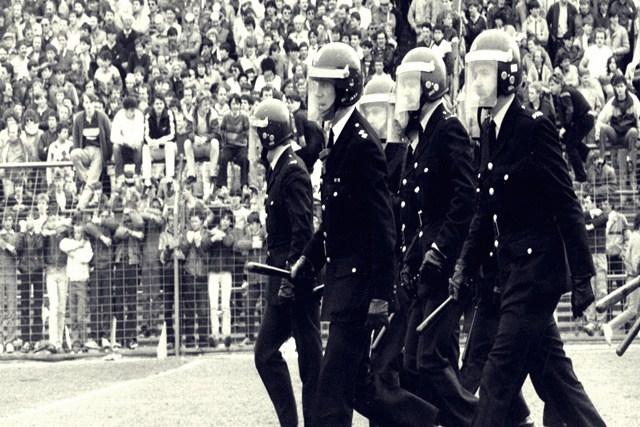
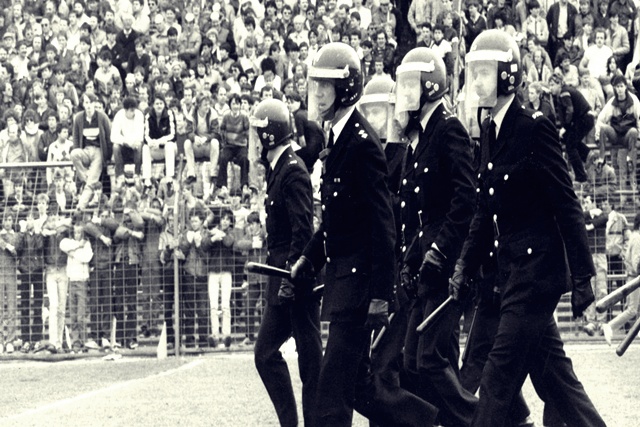
He was a detective on a secret mission to break down one of the hottest hygiene groups in England, Brimingham's Zulu Warrior. They were one of the most extreme groups of the ‘80s in Britain, who made rumors on the streets and streets around the country. It was a time of tough adventures in which many lost their lives.

The Zulu Warriors, apart from football hooliganism, were a group that began criminal activities such as drug trafficking and possession of firearms. The West Midland police decided to stop.

An action called “Red Card” was launched, led by Michael Layton. This was one of the first police investigations on the island, when it comes to hooligan football teams, an investigation in the sense that a policeman infiltrates the fans.

By the end of the operation, many of the Zulu Warriors ended up in jail after submitting secret video footage by agents. It was the beginning of the end of the notorious band whose “Zulu, Zulu, Zulu …” drowned blood in the ranks of rival fans’ groups.

Layton was rewarded for this operation by the Queen, and in his book describing his quest called Hunting Hunt, he said, “They were scary. When they start scanning Zulu, Zulu … we knew that there was a catastrophe next. They were terrible and had a lot of weapons they used to use. ”

The hooligans were Prime Minister Thatcher's priority at that time, and Layton only served as a homeland, he writes in his book. He describes his secret assignment in 1982: “The name Zulu became known after the 1982 clash with Manchester City fans at Maine Road. He was a fierce defeat, and they got the name from rival groups because they were mostly blacks. At that time most of the hooligans were right-winged without tolerance to migrants. ”

The other big round about which Layton writes is the conflict between Warriors and Potrsmouth hooligans. “Zulu stood in formation as a Roman Cohort. It was unbelievable how they looked. But the incident against Leeds in 1985 was a sign for us to be a state in stopping these savages. People, there were 500 injured and one dead young Leeds. ”

He fired 15-year-old Ian Hambridge after he fell on a supporting wall that did not withstand stamped fans who fled in front of Zulu Warriors. “We waited until 1987 when we launched the action. We planned to go to their The Crown cafe, which was their base. In that cafe just a couple of months ago one of my colleagues barely survived. The Zulu Warriors have made 32 seams on their heads. ”

The moment came, and the undercover agents, the five of them, went to the pub to identify the major breakdowns. “We were as galloping as they were to keep themselves unnoticed. However, only five minutes later, a shovel, Kevin, approached us, and said, “You are a cop!” Twenty-two people surrounded us for ten seconds, and a break was formed. We've broken windows and barely saved. The day after we all arrested, because we did not need much evidence that they were total maniacs. ”

Layton wrote in his book that he did not intend to magnify the hooligans, but from the police angle, he showed up with the problems faced by agents so that football in England was what the family and children were doing today.

Policijska operacija “Crveni Karton” protiv Zulu Warriors-a

Bio je detektiv na tajnom zadatku s ciljem da razbije jednu od najžešćih huliganskih grupa u Engleskoj, Briminghamove Zulu Warriorse. Bili su jedna od najekstremnijih grupa ‘80-tih u Britaniji, koji su na tribinama i na ulicama širom zemlje pravili nerede. Bilo je to vrijeme teških navijačkih sukoba u kojima su mnogi izgubili živote.

Zulu Warriorsi su osim fudbalskog huliganizma, bili grupa koja je počela s kriminalnim aktivnostima kao što je dilanje narkotika i posjedovanje vatrenog oružja. West Midlandska policija odlučila je stati u kraj tome.

Pokrenuta je akcija pod nazivom „Crveni karton“ a vodio ju je Michael Layton. To je bila jedna od prvih istraga policije na Otoku, kada su u pitanju huliganske fudbalske grupe, istraga u smislu da se policajac infiltrira među navijače.

Do kraja operacije, mnogi od Zulu Warriorsa su završili u zatvoru nakon predočenih tajnih video snimaka od strane agenata. To je bio početak kraja zloglasne bande čiji je povik „Zulu, Zulu, Zulu… ledio krv u žilama suparničkih navijačkih grupa.

Layton je nagrađen zbog ove operacije od strane Kraljice, a u svojoj knjizi, u kojoj opisuje svoj zadatak pod nazivom „Lov na huligane“, je rekao: „Bili su zastrašujući. Kada počnu skandirati Zulu, Zulu…znali smo da nakon toga slijedi katastrofa. Bili su užasni i imali su mnogo oružja koje su koritili.“

Huligani su u to vrijeme bili prioritet Vlade gospođe Thatcher i Layton je samo služio domovini, piše u svojoj knjizi. U njoj opisuje svoj tajni zadatak, slučajem iz 1982.: „Ime Zulu postalo je poznato nakon sukoba 1982. sa navijačima Manchester Cityja na Maine Roadu. Bio je žestok okršaj, a ime su dobili upravo od suparničkih grupa jer su bili većinom crnci. U to vrijeme je većina huliganskih grupa bila desno orijentirana bez tolerancije prema migrantima.“

Drugi veliki okrašaj o kojem Layton piše je sukob Warriorsa i Potrsmouthovih huligana. „Zulu je stajao u formaciji kao neka rimska Kohorta. Bilo je nevjerovatno kako su izgledali. Ali, incident protiv Leedsa 1985. je bio znak da krenemo kao država u zaustavljanje tih divljaka. Ljudi, bilo je 500 povrijeđenih i jedan mrtav mladić iz Leedsa.“

Stradao je 15-godišnji Ian Hambridge, nakon što je na njega pao potporni zid koji nije izdržao stampedo navijača koji su bježali pred Zulu Warriorsima. „Čekali smo sve do 1987. kada smo pokrenuli akciju. Planirali smo odlazak u njihov kafić The Crown koji im je bila baza. U tom kafiću je samo par mjeseci ranije jedan od mojih kolega jedva ostao živ. Zulu Warriorsi su mu na glavi napravili 32 šava.“

Došao je trenutak, i undercover agenti, njih pet, krenuli su u pub kako bi indentifikovali glavne izgrednike. „ Pili smo i galamila baš kao i oni kako bi ostali nezapaženi. Međutim, samo pet minuta kasnije nam je prišao sijedi šanker, Kevin, i rekao: „Vi ste policajci!“ Za deset sekundi nas je okružilo dvadeset ljudi i nastao je lom. Razbili smo prozore i jedva se spasili. Dan poslije smo sve uhapsili jer nam nije trebao veći dokaz da su totalni manijaci.“

Layton je u svojoj knjizi napisao kako nije imao namjeru veličati huligane, već da iz policijskog ugla prikaže s kakvim su se problemima suočavali agenti kako bi fudbal u Engleskoj bio ono što je danas, praznik za porodicu i djecu.

(izvor: live387.ba)

Firenca u ljubičastom dimu, navijači veličanstveno ispratili svog kapitena

Navijači fudbalskog kluba Fiorentine napravili su zaista veličanstven ispraćaj svom kapitenu Davideu Astoriju.

Fudbaler sjajnih igračkih, ali prije svega ljudskih osobina bio je i ostao poštovano lice u cijeloj Italiji, a jučer je otišao na posljednji počinak.

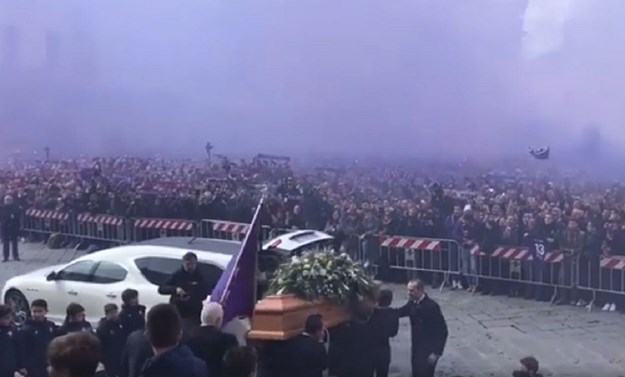
Za vrijeme trajanja sahrane u bazilici Presvetog srca u centru grada Firence, na kojem je posmrtni govor Astoriju čitao njegov zamjenik, hrvatski fudbaler Milan Badelj, na trgu ispred crkve sakupilo se više od deset hiljada poklonika fudbalera koji je umro niti dva mjeseca nakon 31. rođendana.

Ceremoniju su slušali preko zvučnika, a kada je ceremonija završena, lijes je iznesen iz crkve.

Tada su navijači priredili sjajan oproštaj sa svojim kapetanom. Počeli su gromoglasno navijati, upalili su veliki broj bengalki i ljubičastih dimnih bombi, a dok su lijes s Astorijevim tijelom unosili u automobil koji će ga odvesti na groblje zasuli su ga šalovima fudbalskog kluba Fiorentine.

(Balkanski Navijaci)

Obracun navijaca na Kosovu (VIDEO)

U toku jucerasnjeg dana doslo je do velikih obracuna navijaca Drenice i Gnjilana, ovaj lokalni derbi u tzv Ligi Kosova prekinut je kada je jedan igrac Drenice pogodjen tvrdim predmetom u glavu posle tog dogadjaja domaci navijaci nasrnuli su fizicki, a potom i kamenicama na malobrojnije gostujuce navijace koji su izvukli deblji kraj u ovom sukobu. Nekoliko desetina navijaca spas je pronasla u terenu i na taj nacin izbeglo linc. Dok je  10-ak navijaca  gostujuce ekipe zavrsilo u bolnici sa laksim i tezim telesnim povredama.


Partizan – Dinamo Vinkovci

Dakle bio je do jaja suncan dan, (PARTIZAN – Dinamo V 3:1- 12.jun ‘85), i vec se moja ekipa u kraju lozila na dobru sprdnju koja nas ocekuje na nasem fudbalskom hramu, i naravno odmazdi za neresen rezultat u zimskom delu prvenstva (2:2) u vinkovcima…(…iza mitrovice, evo stizu, evo stizu grobari ubice…Srecan..Oduvek zadojeni sa nekoliko elemenata kao alkohol, huliganizam, punk, sex & violence….Srecan, okupili smo se u prolazu kod ortaka starije garde(direktno odgovornog sa jos nekoliko njegovih vrsnjaka za trovanje nas mladjih u ono vreme) i tu krece uobicajeno zezanje nekih 3 sata pred tekmu…Umobolne ideje stizu jedna drugu, medjusobno podjebavanje ide po redu voznje, kao i pljuge, cirka i GBH iz radio kasetofona matorca spomenutog iznad….Srecan
Dobacuje se prolaznicima sve i svasta, neki se smeju neki su uvredjeni, a takmicenje pogodjanja po faci ko od njih navija za zvezdu je podigla raspolozenje, mada je lako ljakana provaliti sa kilometar rastojanja…
Ribice nisu gotivile dobacivanja na prvi pogled, sa obzirom na sexualnu sadrzinu istih, mada se primetio osmeh sto su zapazene, pa su mnoge ukapirale kako im to dize cenu u kraju, i kasnije nam neke priznase kako i nismo tako losi momci….Srecan
Po oubicajenoj semi hvatamo nas omiljeni bus 23, i uz sprdnju i maltretiranje neduznih putnika silazimo na sajmu, i lagano uzbrdo do JNA…Pricamo usput tako o punku, englestini, huliganizmu i sranjima tipicnim za Jug, i gore pomenutom matorcu, pada na pamet stvarno originalna ideja da nesto sa punk koncerata prenesemo i na Jug….POGO..
Do jaja, tu smo se odmah popalili i uz ‘here we go’ krenuli da se guramo i sutiramo, i uz par modrica stigosmo do Juga, naravno dogovor je pao da odradimo sutku, a da nikog prethodno ne obavestimo…
Alkoholijada ispred juga standardna, zezanje sa prvom ekipom, Pampi, Zare, Belgija, Trlaja, Crnogorac u dobrom fazonu kao i ostali grobari…
Tekma lagano pocinje, mi odlazimo na nasu sipku, koja je uvek bila prazna bez obzira na guzvu(inace sada je bivsa zahvaljujuci smanjivanju tribine i yebenim stolicama), par zutih dimnjaka gori, i izmesan sa mirisom pljuga i alkohola pravi onaj gotivan miris koji me je uvek lozio na incidente…Srecan i Jug naravno…


Napokon kod nase sipke svi raspolozeni za pesmu, sprdnja sa Vojom Pancevcem koji je uvek ispod nas sedeo, i sa ostalim grobarima okolo…sve je kako treba…Par pandura iznad nas, ali ne pridajemo im mnogo vaznosti, ipak je mala tekma (~ 15, 000 grobara)…Mi mladji smo bili napaljeni i puni ideja i stalno smisljali neke gluposti, i cesto zapocinjali pesmu na jugu (coravom se to par puta nije dopalo, misleci da mu ugrozavamo vodjstvo, sto je kasnije ukapirao da nema veze sa mozgom, pa smo opet bili ok)…
I tako sve po redu voznje i onda sredinom prvog poluvremena krene prozivka medju nama ko ce da krene sa sutkom+'here we go’, i na nase iznenadjenje uradi to lik koji je uvek isao sa nama, bio povucen ali i mnogoo matoriji….!? Svi smo se primili, ljudi u soku, usput su neki malobrojni prihvatili fazon, i onda oni ‘nebitni’ panduri sa vrha tribine dolaze do nas i pocinju da nam lupaju samare…Srecan Prvi je popio Paja matorac, nisam odoleo da ne spomenem njegovo ime, zasluzio je, pa ja i jos njih nekoliko, i onda krece gurka sa njima, rasprava…Zapamtio sam kljuna koji kaze ‘to je zato sto gurate ljude, sram vas bilo dripci….Srecan’
Tu su oni naravno popustili, a mi napaljena stoka, nastavili sa sutkom…Ostalo je istorija, i sada znamo kako se to prosirilo i na ostale ‘navijacke’ grupe u ex-yu…
Ljudi su na Jugu to polako prihvatali, tempo i duzina sutke se produzavala do onih nezaboravnih skoro 45 minuta drugog poluvremena na cmarakani protiv gunjcija cini mi se ‘95(bila je neka kisa taj dan)…ako se neko seca koja tacno tekma neka javi…Ne retko se desavalo da zapocnes sutku na svojoj sipci, a zavrsis zagrljen sa nekim nn grobarom kod ograde…Ono sto se meni u tome dopalo je (osim anarhicnosti) to sto su tako i ostali grobari na tribini odakle god da su, bivali popaljeni i aktivniji…Mislim da je sutka dosta doprinela jacanju tog nekog grobarskog duha, gde su svi grobari jedno i gde svako za svakog brine i skace ako treba u fajt sa murijom…Jeste mnogi su pevali ‘evro gol’ obzirom da im engleski nije jaca strana, sto nas je uveseljavalo do jaja, a i radile su se neke radnje u guzvi o kojima ne bih javno…Srecan
Bilo je tu jos egzibicija i originalnih desavanja, ali posto nisam u ljubavi sa tastaturom, toliko za sada od mene…